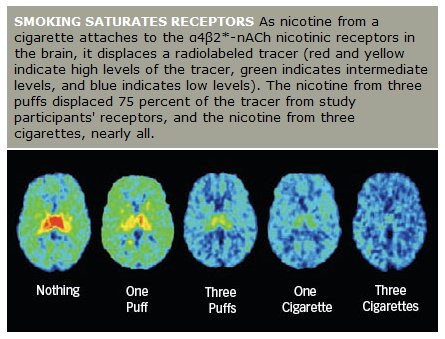
 Looking at the photo to the right will show us that nicotine will stimulate the receptors in your brain making you act, feel, and think differently, but why is this so bad? The News Medical Net relates to the next website I stumbled upon by showing facts about effects of nicotine on not only the body and mind but also the brain itself, specifically the receptors that receives neurotransmitters sent to them.
After gathering information from Why Quit.com, I have come to realize that it's not the nicotine itself that is addictive, but the actual cigarette and all of the chemicals inside. Imagine it like a harmless person walking alone doing no harm, but the second it jumps into a car with deadly people it can have dangerous consequences. So is it bad for you or good for you? All of this talk about cigarettes making your receptors and brain function abnormally makes me begin to think about why it is frowned upon by some people, but others take it just fine? This topic is proving to be controversial yet so interesting, we have the answers, statistics, and evidence right in front of us yet people are still huffing and puffing away. I will however, be searching for articles or books written by doctors or ex smokers to get a different standpoint rather than trusting the sources I have been finding on the web.
Photo Credit: http://whyquit.com/whyquit/linksaaddiction.html

One interesting component of your inquiry could be the social aspect, or even modern "taboo" of smoking. Most people recognize the cigarettes are not healthy, but then again, so neither is fast food or any number of lifestyle choices people make. What causes cigarettes to be a greater social taboo (in some cultures/contexts) than eating at McDonald's? Which sub-cultures within contemporary America are the most against smoking, and the most receptive of it? Has smoking become a sign of socioeconomic status? Hmmm... looks like I generated lots of questions for you!
ReplyDelete